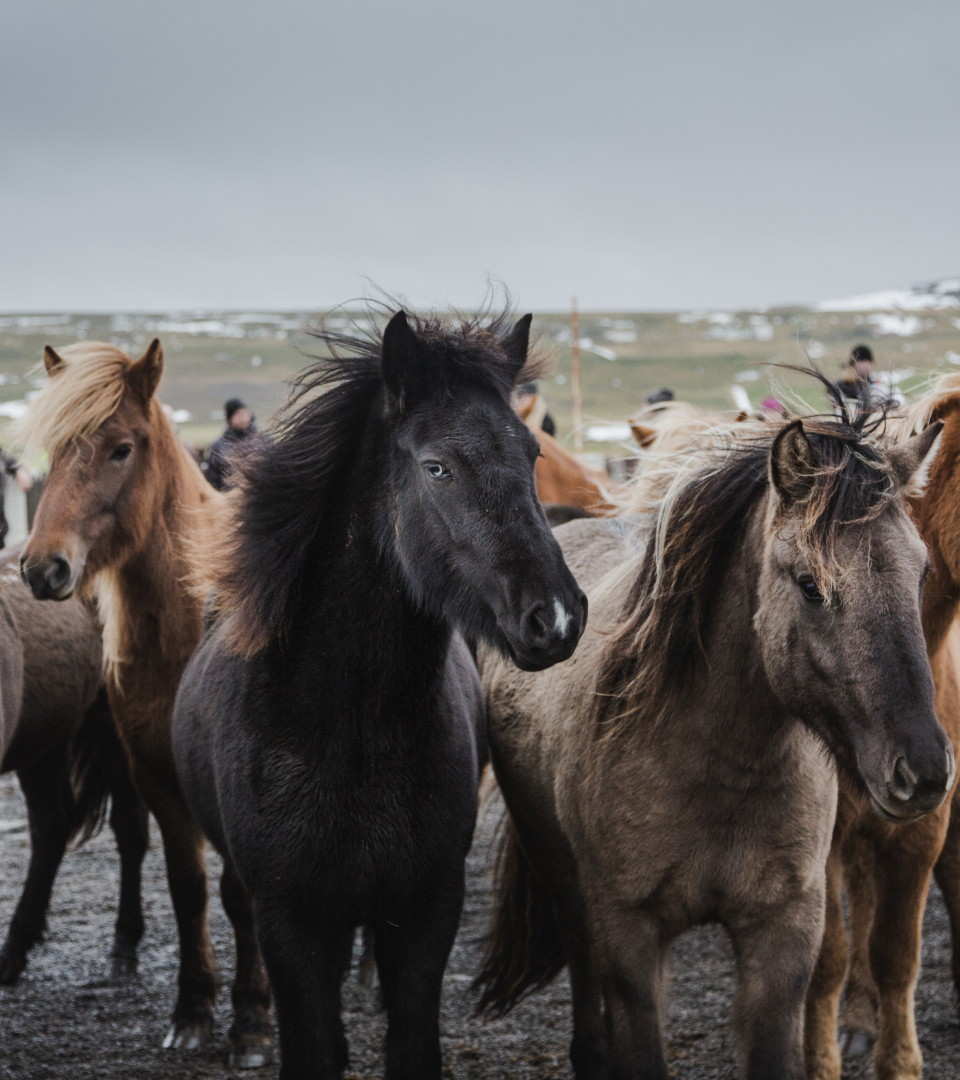
When buying a horse you may have already made up your mind on the colour, age, sex, breed, and the intended use. Suitability of the horse for that intended use is best determined by a pre-purchase examination conducted by an experienced veterinary surgeon.
The daily cost of basic horse care, whether in full work or not, is considerable, ongoing and increasing. By comparison, arguably the cheapest aspect of horse ownership is purchase.
So getting it wrong can lead to ongoing avoidable expense. Vetting a horse follows guidelines set down by the Royal College of Veterinary Surgeons and the British Equine Veterinary Association.
A detailed report of the horse or pony is provided if, in the Veterinary Surgeon’s opinion, it is suitable for the purchaser’s intended use. It is helpful if the horse or pony is in consistent work and reasonably fit when presented for the pre-purchase examination. Some types of lameness and unacceptable behaviour are only present if the horse is not sufficiently prepared.
A full pre-purchase examination is performed in five stages and takes approximately an hour and a half. A limited - or two stage - examination takes 30-minutes and will provide restricted information to the purchaser.
The five stages are as follows:
The preliminary examination: The vet will examine the appearance and condition of the horse's body. This includes examination of the teeth, the heart at rest, the eye by ophthalmoscope, the skin, limbs, feet and flexion of the limb joints to reveal pain or limitation of movement during stage two.
The trot up: Here the animal is observed walked and trotted in hand by an assistant on hard, level ground, to assess any abnormalities of gait and action.
Strenuous exercise: This stage gives the animal sufficient strenuous exercise to 1) make it breathe deeply and rapidly - so that any unusual breathing sounds may be heard;
2) to increase the action of the heart, so that abnormalities may be more easily detected; and
3) to tire the animal so that any limb and/or gait abnormalities may be revealed after the period of rest.
Period of rest: The animal is allowed to stand quietly and the veterinary surgeon examines the breathing and heart, as they return to the resting levels.
The second trot up and foot examination: The horse is again trotted in hand on a hard surface. It is also turned tightly and backed up, so that any abnormalities may show themselves as a result of the strenuous exercise and rest period.
When purchasing a horse and arranging the pre-purchase examination, it is important to consider the horse’s current workload. A horse being considered for competition use and currently in light exercise and not competition fit can be difficult to assess for the intended purpose.
Once the examination is complete, the veterinary surgeon will provide a report in the form of a discussion document, setting down each observation and point of concern with an opinion and likely significance for the intended use.
| 1:00am | Badminton 2011 - Cross Country |
| 6:00am | The Saddle Club |
| 6:30am | The Saddle Club |
| 11:00am | Wonder Dogs |
Advertisement
Advertisement

About Us | Advertising Info | Contact Us | Help | Terms of Service | Privacy Policy | Sitemap | Feedback
© H&C TV Ltd 2008-2012