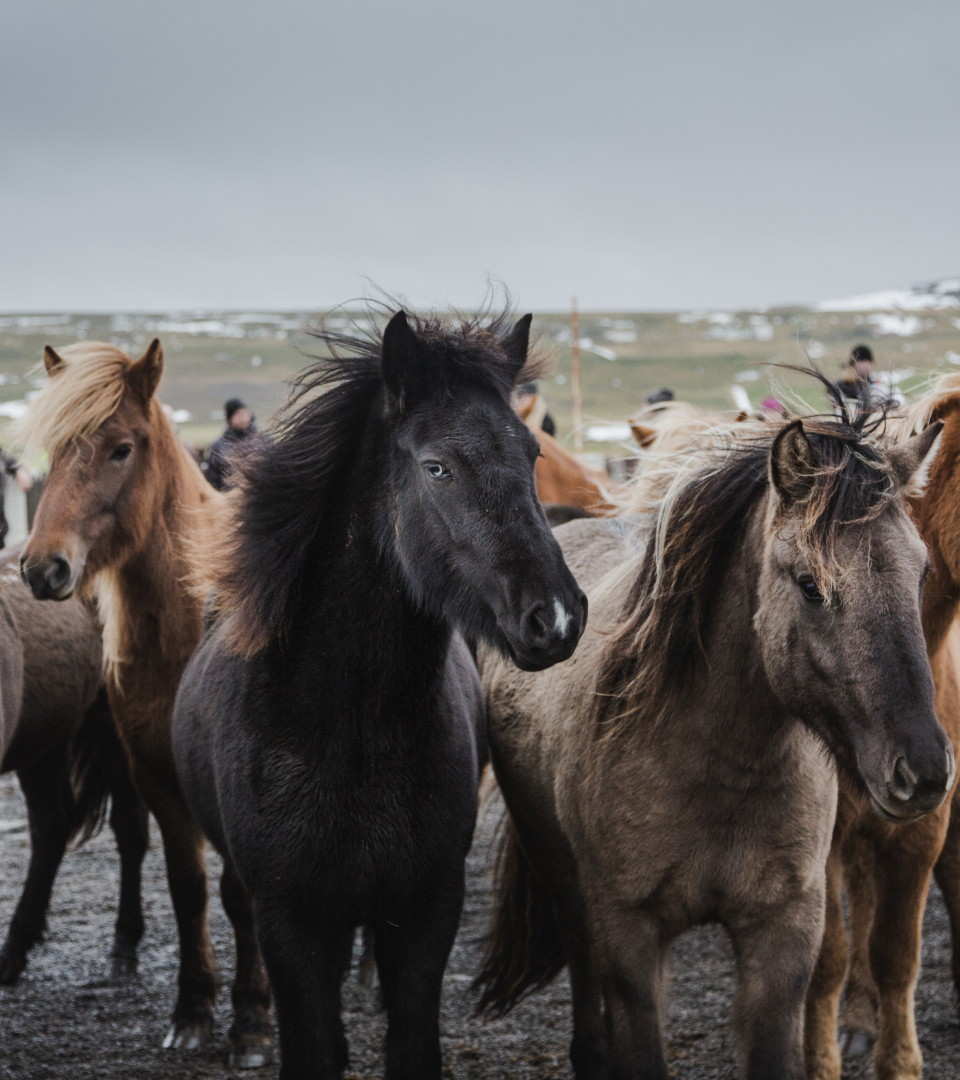
“Hi, I want to know if it is safe for my horse to be turned out during this cold spell. There is a safe, flat, grippy surface to the field, and he is calm and sensible when out - he would rather try and eat than gallop about, even after two weeks inside! I only want to put him out for a couple of hours a day while I muck out, as he seems really fed up when confined to his stable. However, several other liveries at my yard believe the frosty ground is bad for him, saying he could get stress laminitis from the cold floor, or eating frozen grass will harm him. Is there any truth in what they say? Sarah, Lancashire.”
H&C’s expert Jenny Rudall replies: “Hi Sarah, what an excellent question for this time of year and one I get asked a lot. Unfortunately, there is no easy answer.
Let me break it down for you so you can make your own informed decision. It does come down in the end to personal preference, and I am sure many people will agree or disagree with my opinion.
I personally like to turn my horses out if I can. I am lucky and have not had a broken leg or serious injury turning the horses in my care out in the cold weather, but that is not to say I haven’t heard some horror stories. I have heard of horses slipping in the snow or not seeing a hole, but I have also actually seen a horse slip and break its leg on what one would say was perfect ground so accidents can happen either way.
I think that it hugely depends on your fields; if as you say the surface is flat and grippyand has a good covering of grass, then most horses will benefit more from a couple of hours out rather than staying in. Even turning out for an hour and riding if you are able will prevent your horse from leg problems and galloping about when he does finally get to the field. I would be more worried about the problems of 24 hour stabling than stress laminitis and I have never worried about my horse eating frozen grass. As you say he has a sensible head and you could even put some hay out in the field so he can stretch his pins and still have something to eat.
To find out more about the various causes of laminitis, visit the Laminitis Trust’s website at www.laminitis.org, or give them a call for their advice. To avoid your horse munching solely on frozen grass, put some hay out for him. Some horses can be a little poorly after eating frozen grass, but some are fine – it’s about knowing your horse and what is right for them. As I say, putting hay out can prevent them eating the frozen grass in any case. Read our article on Caring for Horses in Cold Weather too.
If it is safe, I will always turn out, but you must make sure that your route to the field is not icy. Four legs can easily go in different directions, and the same in the field. Make sure there are no ice patches and the waterer is working. Rug up nice and warm and if he is not used to it, don’t leave him out for hours. A bit of Vaseline in the feet can also help prevent snow balling up in their feet. Also, make sure you have permission to turn out, this time of year can be damaging to the ground and some yards limit turn out.
I really hope this helps and thank you for your question as I am sure there are others out there with the same problem. Unfortunately, it’s not as easy as just saying ‘Yes, it’s fine’, or ‘No, keep your horse in’, but the decision is yours and not the other owners at your yard. Do your own research and talk to vets and yard managers to further your own knowledge so you can make your own decision.
Good Luck, Jenny.”
Editor’s note: Advice from H&C experts does not replace veterinary advice and we advise all users to consult their horse’s healthcare professionals for advice too.
| 1:00am | Badminton 2011 - Cross Country |
| 6:00am | The Saddle Club |
| 6:30am | The Saddle Club |
| 11:00am | Wonder Dogs |
Advertisement
Advertisement

About Us | Advertising Info | Contact Us | Help | Terms of Service | Privacy Policy | Sitemap | Feedback
© H&C TV Ltd 2008-2012