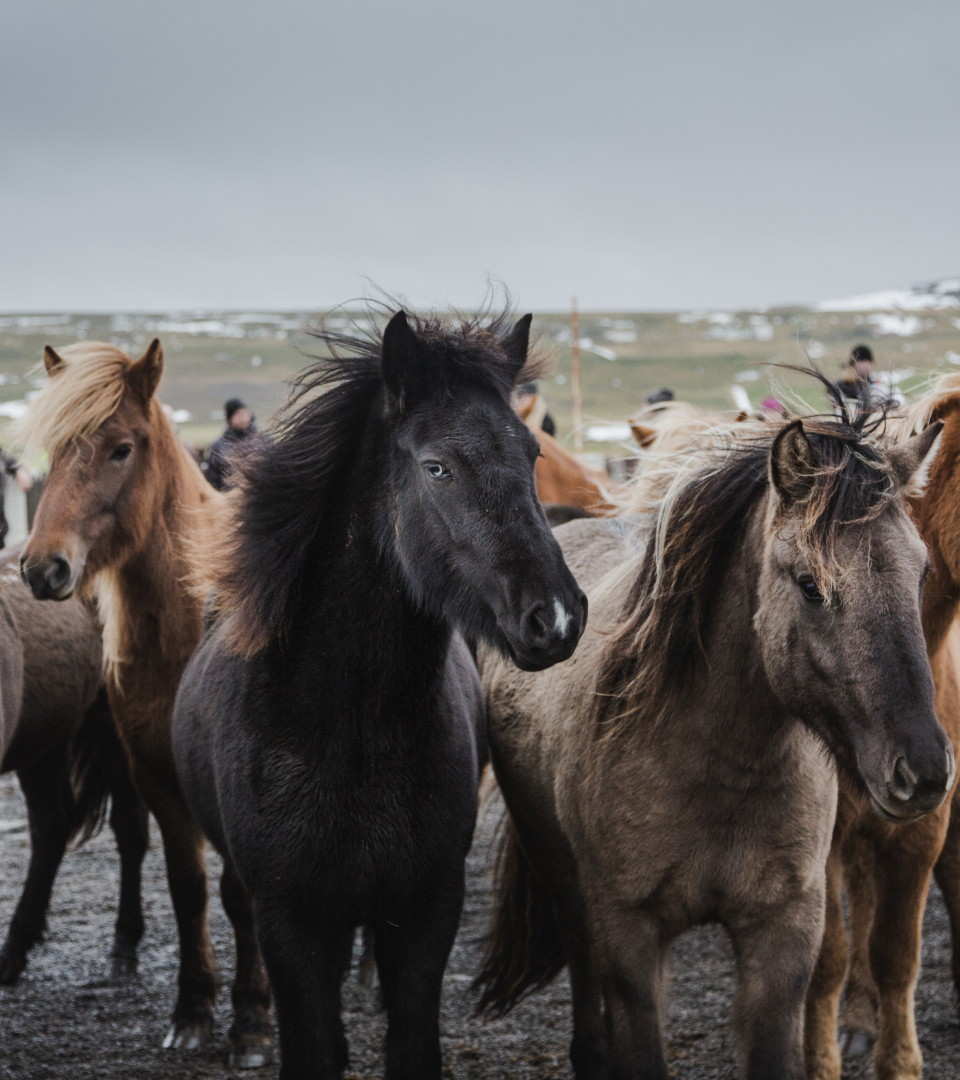
H&C receive many questions from users regarding horses that won't stand while being handled. We put one such question from Fiona to Australian trainer Jason Webb.
"Dear H&C, could you please give me advice on how to get my 15.2hh gelding to stand still? I put him in cross ties and he constantly paws at the ground, and he runs out on me as I try to tie him up. Even though I discipline him immediately, he always tries it on with me and I am at my wits end. He’s a great jumper and generally good being ridden, but he’s always fidgeting.
Another problem I have is that if another horse trots by me out on a hack, he does everything he can to take off behind him."
Jason replies:
"Dear Fiona,
It sounds like you are getting very frustrated with your horse. I am afraid it is difficult to give you one exercise to cure him and it is going to take a lot of ground work before dealing with the ridden issues so that you have control of him at all times.
Horses are naturally claustrophobic animals and their instinct is to be able to flee from ‘danger’ they may see or feel. By tying horses up or stabling horses, we are curbing that instinct - cross ties, for example, can make a nervous horse feel trapped. Another thing to consider is how you are behaving around your horse - if you are becoming increasingly frustrated by him, you are increasing that sense of claustrophobia and stress, try to stay calm even if he’s behaving badly.
We need to find a way of making him want to stand still, rather than forcing him to do so. Your horse’s nature is another thing we have to work with, if he is naturally anxious or fretful he may take longer to settle into certain situations and this anxiety shows itself by pawing, fidgeting, barging and rushing. This is his nature but we can still greatly improve his reactions and teach him to be more rational and to listen to you but we have some work to do to get there.
My aim for you with your horse is to give you some tools to use that will give you more control and confidence when working with your horse which in turn will result in him becoming less anxious and easier to control, with you as a leader.
When a horse will not stand it comes back to basic ground handling. Here are four questions you need to be able to answer yes to:

If your horse is very energetic/nervous let them lunge around you, do not worry if it looks messy just keep them circling around you until they settle even if this is on the end of the lead rope. By doing this you are releasing some of that nervous energy and they will become more rational and ready to listen to you.
I always work horses in rope halters as they are not as comfortable for the horse to run into should they barge past you unlike a traditional English halter which has a far softer action. When leading your horse hold the rope with some slack and allow your horse to walk with his head by your shoulder following you, rather then you being at his shoulder with him leading you. Do not hold on tightly under his chin as this can make some horses feel claustrophobic, your lead rope should look like you have a smile in the line.
If your horse barges past you let him but prepare to hold on and give a sharp pull just as the horse reaches the end of the line, he will get a bump on the nose and his head will turn back towards you. Reposition him back behind you and continue leading him. A good exercise is to “walk a box” in the school. Your horse should follow you but if he doesn’t let him walk past before giving a sharp pull to turn him back so that he follows you again. Soon you will find your horse is following you and you’ve gained more control. Remember to reward your horse by giving them a rub on the forehead each time they make the right choice in following you.
Tying up:
At my centre we have a specific tie pole pen to deal with this problem which I appreciate many owners do not have but we can improvise! Tying up training is often overlooked and you need to address the tying up which will help your horse in other areas too. You have not said that he breaks off but I would recommend tying him up in his stable first and then progressing to the yard - Tie him with about a foot of line so that he can comfortably hold his head but not long enough to get a leg tangled in. He may paw the ground, fidget and generally get upset about being tied up but he needs to go through this state of mind and get it out of his system before he can progress.
Some horses may need to stand tied up for one or two hours before they finally quieten down and relax but do not worry, as long as they are in a safe place leave them to go through this process. It is tempting to run over and tell them off or pat them but refrain from doing this, it is better to muck out of have a cup of tea and just monitor them, ensure you have enough time to see it through and tie him up until he’s relaxed. As soon as he is standing quietly he can be ridden or put back out in the field. Try to do this daily until it ceases to become an issue in the stable. You can then progress to tying up in different areas of the yard – be prepared that he may need to go through the same process again before he settles.
If you are looking to saddle your horse get the saddle blanket and put it on your horse don’t be sneaky about it. If they move continue doing exactly what you were doing until they stop. Now flex your horse left and right, they will more than likely walk around when you do this just follow them and keep there head flexed, they will eventually stop and relax. Repeat these two stages until your horse no longer reacts to either. Flexion can now be used as a means of making unwanted movement uncomfortable and stopping and standing comfortable.
To further this process if your horse gives you an unwanted movement there are two things you can try, immediately flex your horse to a stop and then reposition using lateral (sideways) movement back the way in which they just came. Every time you have successfully repositioned your horse you must leave them for 5 to10 seconds to realise where they are before you do anything else.
If this does not work after three attempts lunge them around you at a trot for at least 10 circles and reposition. If they are backing off take them backwards around in a circle until they are just back from where they started and step them forward into position, wait, then continue what you were trying to do with them.
This will take some persistence on your part be keep at it and be clear about what you are doing and you will get there.
With regard to your horse rushing to keep up with a friend’s horse this is all part and parcel of the same problem you are having on the ground, the anxiety and nervous energy your horse has is spilling into his ridden work. There could be two areas to work on here, the first is your horse may be insecure and doesn’t want to be left behind and is attached to your friend’s horse and the second is the rushing and how to handle a horse that gets strong or rushes with you.
When a horse begins to run or rush most riders pull back on both reins and tense up, in return the horse pulls on the reins harder and coils up under you or runs through you, basically the more you pull, the more they pull and we both know who is the stronger party! To control that energy and movement and get control of the horse’s feet again I use an exercise I call “winding down” which is just like the lunging exercise I described at the start.
When your horses runs on or rushes I would give a pull on one rein only and bring the horse round onto a fairly tight circle with an open hand to direct them. I would keep the horse on this circle, the horse may be really running in trot or even canter to begin with but the circle will mean it is hard to maintain this pace and sooner or later they will tire and have to slow down. The horse is now doing all the work, your only having to maintain the circle by using an inside rein pull rather than both reins so the horse cannot set on you and exhaust you.
The horse will soon slow down and the very fact it is on a circle running will take the edge off the horse as it gets tired, just like I discussed earlier with lunging on a circle to help with the ground work. As soon as you feel the horse slow down and begin to listen to you then you can then make the circle bigger to reward them and once they are at a pace you are happy with you can continue on your chosen route. I would recommend trying this exercise in an arena first so that your horse begins to learn what will happen when he rushes - and then on hacks involving your friends horse - preferably on tracks and fields so you have the space to work safely.
Be confident, the first few times you do this it will feel messy, your horse will not be in an outline or working as you may wish but you horse will soon learn that every time he gets strong and rushes that he will be put onto a circle and become less and less inclined to rush in future.
I hope the above exercises help you and that you find your horse becomes calmer to be around and easier to handle and ride, please do not hesitate to contact me should you need further advice. There is more information on my website www.australianhorsetraining.co.uk and if you would like a rope halter we have them in our on-line shop."
Good luck,
Jason
Advertisement
Advertisement

About Us | Advertising Info | Contact Us | Help | Terms of Service | Privacy Policy | Sitemap | Feedback
© H&C TV Ltd 2008-2012