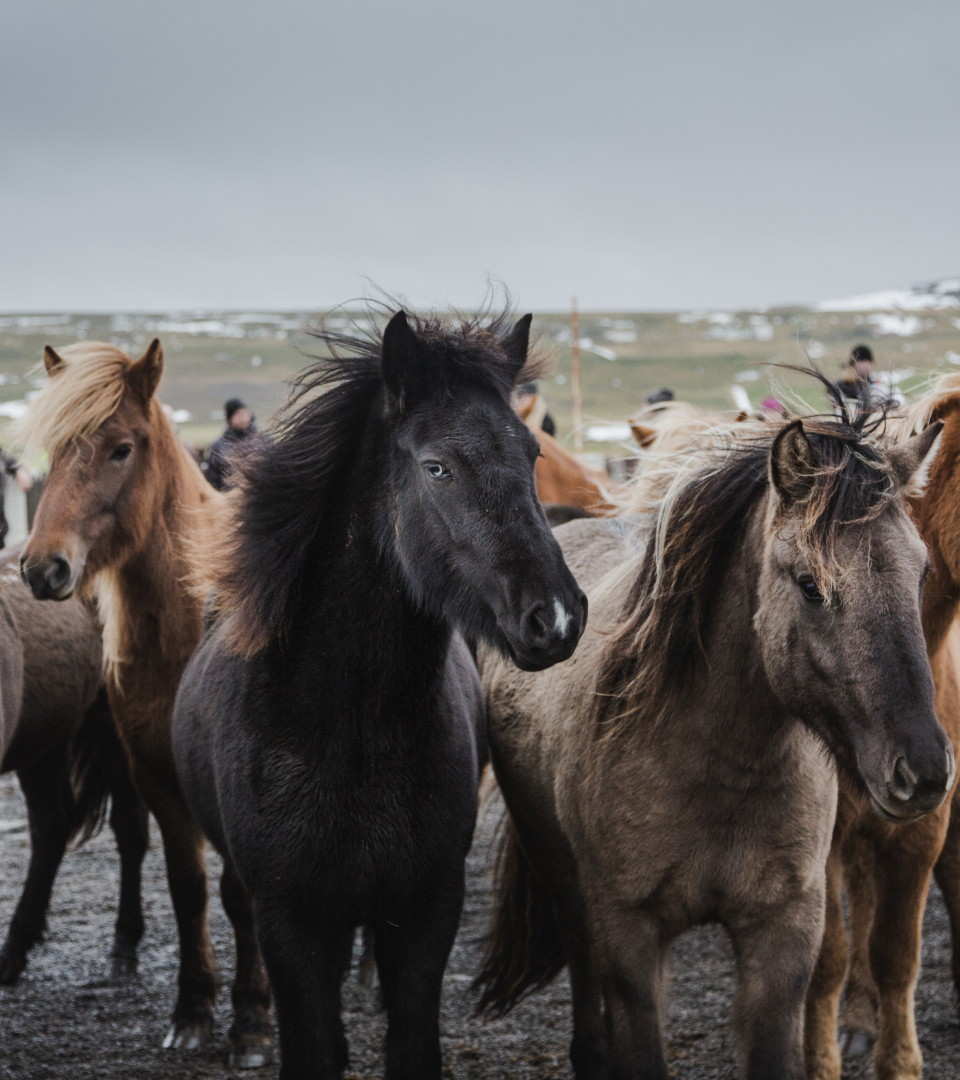
"I have a 10-year-old morgan gelding that, as a three-year-old, injured his right shoulder. He was spooked by a large tree falling over in his paddock and he tried going over a 5ft gate. He was rested, cold hose, massaged, Bute [and had a period of] rehab. The whole thing seemed to heal, but he has a persistent short stride in that leg. He has been out of the show ring for five years due to finances on my part, and I wanted him to have some time off (two years after the initial injury). He has not been on a real work schedule, and I am getting him back on one. I suspect that he tore one of the muscles that are used to bring the leg forward and so he simply doesn't have the same amount of muscle to reach as far forward as the "normal" leg. He does not seem to have pain in the leg as I can stretch it forward and back and he doesn't react negatively, and Bute does not make any difference.
My question is which muscles are involved with bringing the leg forward from the shoulder and are there any exercises that I can do with him to try to rebuild it or build other muscles to help compensate for the injured one? Any suggestions would be greatly appreciated, as I would like to get him back in the show ring next year. I have shown him successfully in Pleasure Hunter and [competed in] Dressage, and he was the number one Morgan in amateur Dressage in 2005. I want to show him as a Western horse, but sill compete in Dressage as well." Jennifer.
H&C blogger and equine massage therapist Katharine Jackson replies: "Hi Jennifer, thank you for your question. Muscles work in co-ordination with each other, and rarely work as single entities. They work in groups, with each individual muscle doing its own specific movement yet working with others to function as a group. A shorter stride can develop from a whole host of problems, and without assessing the horse statically, dynamically and also palpating the muscles, it is very difficult to give any accurate, useful suggestions. However, here are some ideas:
If it is a musculature problem, a shorter stride could be the result of a muscle damaged in the opposing muscle group - that which moves the limb backwards rather than a muscle that moves the limb forwards; if this opposing muscle is not working to its full capacity or if it is holding tension, it will not be as supple and so cannot be stretched enough when the prime mover muscle is contracting, therefore the leg is unable to reach forward as far.
Also, as a result of injury, the damage could be elsewhere rather than the obvious, and to avoid the discomfort the horse is forced to change his way of going. For instance, he may have damaged a muscle in his back, and to cope with this pain and discomfort it may be easier for the horse to use a shorter stride, so his whole biomechanics are altered. The musculature system in the horse is so interconnected that damage to one muscle often has a knock on effect to many others, forcing the horse to adjust how he actually moves to avoid pain.
As the horse moves the thoracic limb (forelimb) forwards the following muscle activity takes place:
Muscles that concentrically contract:
• Brachiocephalicus – draws the thoracic limb cranially. When the leg is stationary it flexes the neck.
• Omotransversarius – draws the thoracic limb cranially
• Trapezius cervicus – draws the scapula cranio-dorsally
• Sternocephalicus – flexes neck
• Biceps Brachii – flexes elbow joint and extends shoulder joint
• Brachialis – flexes elbow joint
• Extensor carpi ulnaris – flexes carpus
• Flexor Carpi radialis – flexes carpus
• Flexor digitorum superficialis – flexes carpus and digit
• Flexor digitorum profundus – flexes carpus and digit
• Supraspinatus – extends the shoulder joint
• Extensor carpi radialis – extends carpus and flexes elbow joint
• Extensor digitorum communis – extends carpus and digit
• Extensor digitorum lateralis – extends carpus and fetlock joint
Muscles that eccentrically contract:
• Brachiocephalicus – lowers head
• Sternocephalicus – lowers head
Fixator Muscles
• Subclavius – stabilizes shoulder joint
• Serratus Ventralis Cervicus & Thoracus – supports trunk when movement is taking place
• Supraspinatus & Infraspinatus – supports shoulder joint.
I would firstly advise you to speak to your vet for his diagnosis and opinion for the appropriate next step, but massage and a stretching regime with a vet’s approval could prove very beneficial to improve his range of movement, keep him supple and encourage balanced tension between the musculature."
Editor's note: Katharine Jackson's answer does not replace veterinary advice and we recommend that you consult your vet before undertaking any complimentary treatment.
| 1:00am | Badminton 2011 - Cross Country |
| 6:00am | The Saddle Club |
| 6:30am | The Saddle Club |
| 11:00am | Wonder Dogs |
Advertisement
Advertisement

About Us | Advertising Info | Contact Us | Help | Terms of Service | Privacy Policy | Sitemap | Feedback
© H&C TV Ltd 2008-2012