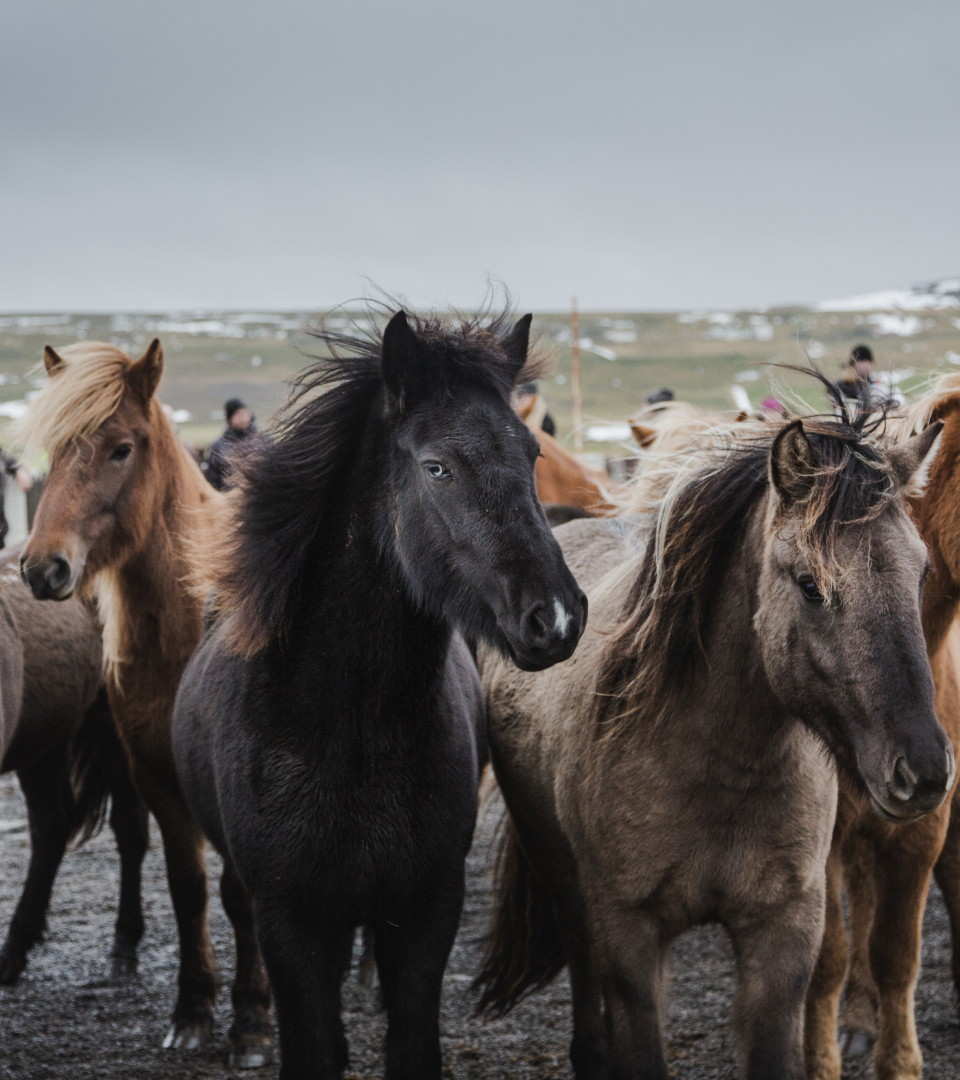
"Hi Kelly, I have a 15.2hh welsh section D called Ruben, I have moved to a new stables and have had problem getting him down the lane. He turns and bolts back to his companions, but this only occurs on windy days or days when he feels scared. I expected this when I first moved him as Ruben has a very strong head and is very flighty. We use a kimbelwick bit and curb chain with Ruben as we are unable to stop him when he spooks. He was been at his last stables for five years and I moved him as he was putting on weight due to sharing a nine acre field with only two geldings. The new stables has eight geldings and 8.25 acres. I'm worried, as recently he reared up and then bolted back to the field gate; he did this four times, so I had to go back to my tack room get my bridle and then walk him down the lane. He bolted once more, then friends came up and assisted me down the lane. Throughout, I thought I was calm but this is dangerous behavouir which I don't want to continue. Please help." Stacey
H&C blogger and Intelligent Horsemanship's Kelly Marks replies: "Hi Stacey. First of all you need to be able to lead your horse safely. I'm going to make some recommendations for this but I would strongly advise that you also get some hands on help from one or Intelligent Horsemanship Recommended Associates to help you.
Starting with the equipment, you need the Dually Halter. This is just so handy because it's completely humane (well, unless you tied a horse's leg up with it or something!) . There's no harsh poll pressure, nothing to harm the mouth obviously, the action is a soft rope over the hard part of the nose which makes it very easy to signal in effect 'yes' or 'no' to the horse and the schooling ring at the side of the head is just the angle to stop the horse if he gets a bit strong.
More and more top trainers are finding better results by using intelligence rather than force. Using leverage rather then solid pressure avoids desensitising a horse's mouth which will eventually develop into a 'hard mouth' making communication with a bit near on impossible. The dually can also be used for long reining and, in fact, we always start riding our youngsters in a dually to teach them the rider aids before introducing the bit.
It is so important your horse doesn’t get in the habit of running off because it’s really dangerous and very hard to cure them of once they’ve started. I’ll give a lot of advice here and then you decide how much or little of this advice you are able to take.
You only take your horse out in a well fitting Dually halter and long cushion web line that’s at least 20 feet in length. You wear a hard hat, gloves that are going to protect you (not skinny nylon) and good footwear. You find a friendly rugby player and you get him to role play being a horse running away while you let out a couple of coils of the line, ‘anchor yourself’ and stop him in his tracks. You see if you let the line out you have ‘leverage’ which makes you a lot stronger than you would normally be.
When you lead your horse out after this, you’re totally prepared to hold him, (if possible to keep your rugby player on the end of the line just in case your horse does make a run for it). If this sound too complicated (it’s so hard covering all eventualities when you can’t actually see the horse or human) do either come to one of the Monty demonstrations taking place starting this October or go to our website Intelligent Horsemanship and go to the section ‘Specialist Horse Training’ to find somebody local to help you.
Kelly."
| 1:00am | Badminton 2011 - Cross Country |
| 6:00am | The Saddle Club |
| 6:30am | The Saddle Club |
| 11:00am | Wonder Dogs |
Advertisement
Advertisement

About Us | Advertising Info | Contact Us | Help | Terms of Service | Privacy Policy | Sitemap | Feedback
© H&C TV Ltd 2008-2012