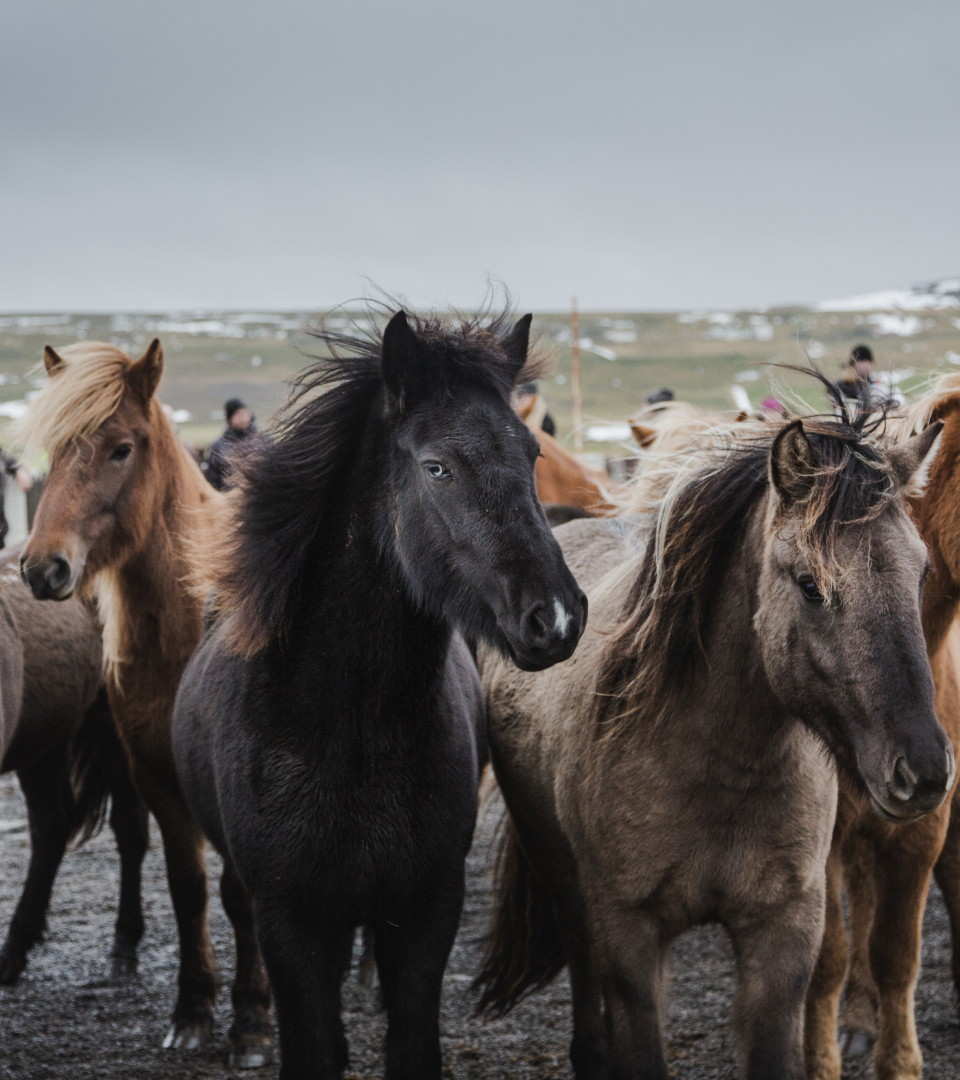
“Coracero is a 15.2hh polo pony, brought over from Argentina, and now played in England by a professional five goal polo player. He has played a lot this season and his owner asked me to have a look at him to identify where he may be sore as he is not lasting a full chukka like he was at the beginning of the season.
Having received veterinary permission, I assessed Coracero statically (standing still) and dynamically (walking, trotting, circling and taking a few paces backwards). Looking at the way he moved and from palpation, it became obvious that he was holding a lot of tension along the top of his neck. He was also particularly tight and sore caudal to the scapula (shoulder blade), dorsal (towards his topline) to his ribs, suggesting a possible saddle fitting problem.
Coracero has relatively wide withers for a polo pony and having asked to see the saddle he wears, I could see that it was too tight over his withers. During locomotion, the forelimb protracts (moves forwards) and the scapula’s rotate caudally (backwards). The panels need to be flared outwards slightly, enough to accommodate the caudal rotation of the scapula, otherwise the horse is forced to take a shorter stride. I suggested that a saddle fitter should advise on this, as this could cause a whole host of potential problems as Coracero is forced to change his action due to an ill fitting saddle. This can cause bio-mechanical problems for the rider too.
As I started working on Coracero he was quite tense, having never had a massage before; he was definitely on edge and alert to what I was doing. I took a while using long slow movements to relax him, letting him get used to me and make him feel at ease. As I continued to work down the neck, he put his head right down and his eyes began to shut, beginning to feel the release of the tension he was holding. He was very quiet throughout the massage and very relaxed.
The neck musculature commonly becomes incredibly tight from polo as it is used to counteract the movements of the player, particularly the trapezius cervicus, subclavius, supraspinatus and triceps, and more so on the off-side. The polo player tends to hold their pony’s head up high, and this combined with sudden checking-up and decelerating to a sudden halt, the pony finds the musculature caudal to their withers becomes affected, and tension builds up in the trapezius thoracis, rhomboids and spinalis muscles, which can be relieved using effleurage and compression techniques.
I also found that along Coracero’s back musculature, notably his longissimus dorsi muscle, he was tight and beginning to atrophy (lose muscle) in this area – possibly due to discomfort from his saddle. The longissimus dorsi is the major muscle of the back, and is the largest and longest muscle of the body. It functions to extend the back and stabilize the vertebral column and needs to be strong and supple to do its work, and particularly to carry the weight of a rider.
I advised the owner to exercise Coracero leading him off another horse as much as possible to allow the back musculature to relax, and begin to build without the weight of a rider on top.
I will be looking at Coracero again next week and will report back on how he is getting on!”
| 5:30pm | Farming Sunday |
| 6:00pm | Global Champions Tour: Valencia |
| 7:30pm | Equitrekking |
| 8:00pm | Wonder Dogs |
Advertisement
Advertisement

About Us | Advertising Info | Contact Us | Help | Terms of Service | Privacy Policy | Sitemap | Feedback
© H&C TV Ltd 2008-2012