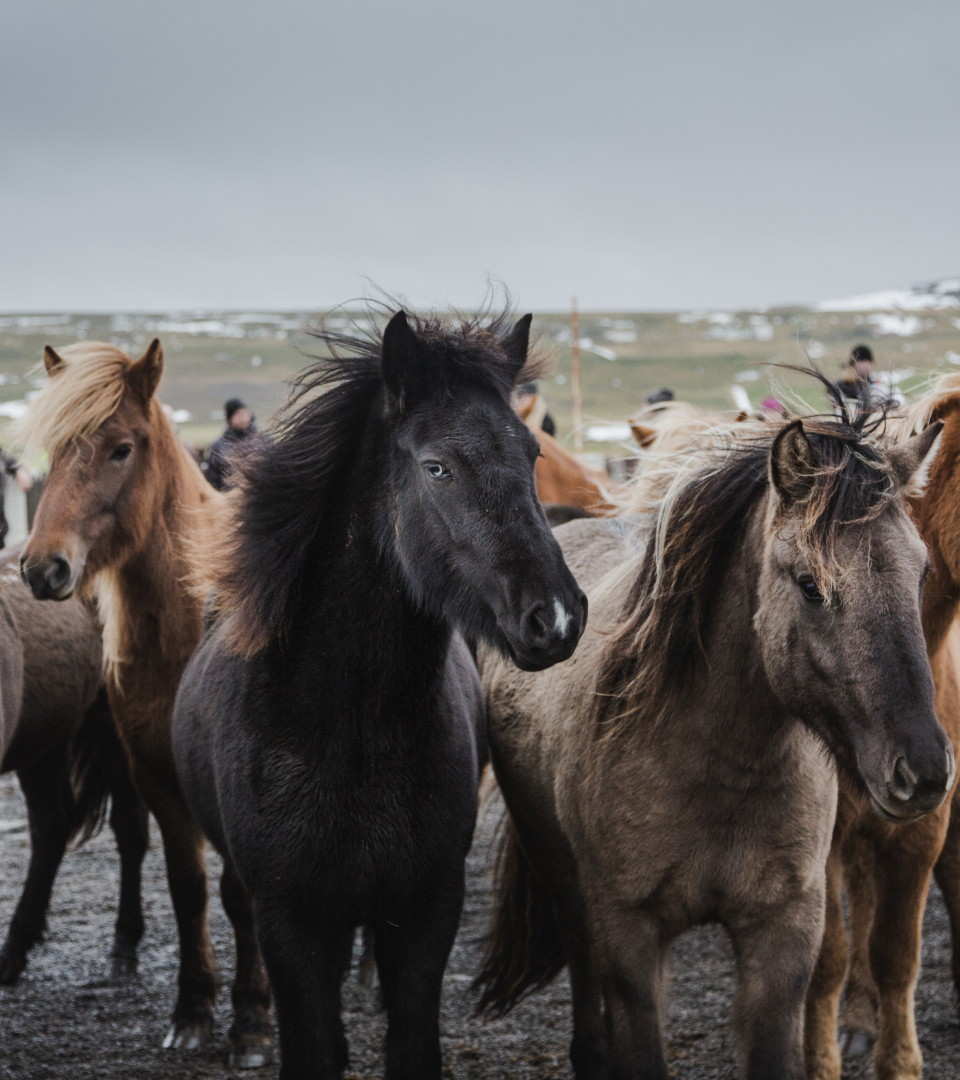
Horses can visually recognise their owners and match this image to their voices, a new study has found.
Chances are you already know that your horse recognises you when you call him across the field, but it may surprise you to learn that he also knows what you look like.
According to research published by the University of Sussex last week (16 May) domestic horses use a sophisticated cognitive system to identify their carers.
“Lots of people say, ‘oh, of course my horses recognises me’, but it’s hard to prove scientifically and conclusively,” lead researcher Dr Leanne Proops told H&C. “So we wanted to find out if they had a mental image of people.”
An earlier study by Dr Proops and Dr Karen McComb demonstrated that horses have the ability to combine auditory and visual information cross-modally to recognise each other.
“We work with horses a lot as they have a complex social behavior, which is their strength as a species,” said Dr Proops. “We also wanted to find out how well they recognise humans, as it’s important for them to be able to do this in their domestic environment.”
The researchers carried out their study using horses that have several carers. The first test involved playing a familiar voice calling the horse’s name from a hidden loudspeaker, followed by an unfamiliar one. At the same two people – one familiar, one unfamiliar – stood either side of them.
It was found that the horses were quicker to respond and looked for longer, and more often, at the familiar person when their voice was played, compared with the stranger.
They then tested whether the horses would be able to distinguish between two familiar voices played to them. This time they had one known handler standing on their right, and one on the horse’s left.
The horses were able to match the voice to the correct person which, according to Dr Proops, shows that they “recognise specific individuals and have expectations of whose voice matches who”.
The horses were better at cross-modally matching (ie using two senses) when the familiar person was standing on their right. As information goes from the right eye across to left side of the brain, this indicates that the left hemisphere of the brain is involved in this process.
“The fact that they were better on one side than the other shows which brain functions are playing a role,” explains Dr Proops. “The right side of the brain detects novelty, while the left matches existing and known templates."
Interestingly, the mares performed better than the geldings in the tests. According to Dr Proops this could be because strong relationships between mares are key to the survival of a herd.
“Other research shows that feral mares which have stronger bonds and more friendships with other mares in the group will have more reproductive success,” she said, adding: “This had not been shown outside of primates before.”
Advertisment(?)
Advertisment(?)

About Us | Advertising Info | Contact Us | Help | Terms of Service | Privacy Policy | Cookies | Sitemap | Feedback
© H&C TV Ltd 2013